Friday, February 25, 2011

Fire and Rain (with apologies to James Taylor)

I’ll start by also apologizing for doing two Grand National stories in-a-row, but oddly enough I’ve had a couple of requests for a story on this particular race.

The 6th annual Nashville 400, run on August 4, 1963, looked to be just another typical Grand National race – along with the Southern 300, the highlight of the racing season at the Fairgrounds in the late 50s and early 60s.

Twenty-one cars started the race, and it was a relatively star-studded field for the 39th race of a 55 race schedule. Rex White, the 1960 champion who always ran well at Nashville, started on the pole. Richard Petty started 2nd. At this point in his career, the future King had only won 24 races in his career. Starting third was Richard’s Petty enterprises teammate Jim Paschal. Paschal was looking for his third consecutive win in the big summer race. Other big names in the field were Fred Lorenzen (on his way to the first $100,000 season in stock car racing history), defending series champion Joe Weatherly, Buck Baker, Ned Jarrett, Bobby Isaac, David Pearson, Cale Yarborough, and ’63 Daytona 500 winner Tiny Lund. Local favorite Jimmy Griggs secured a ride for his hometown race.
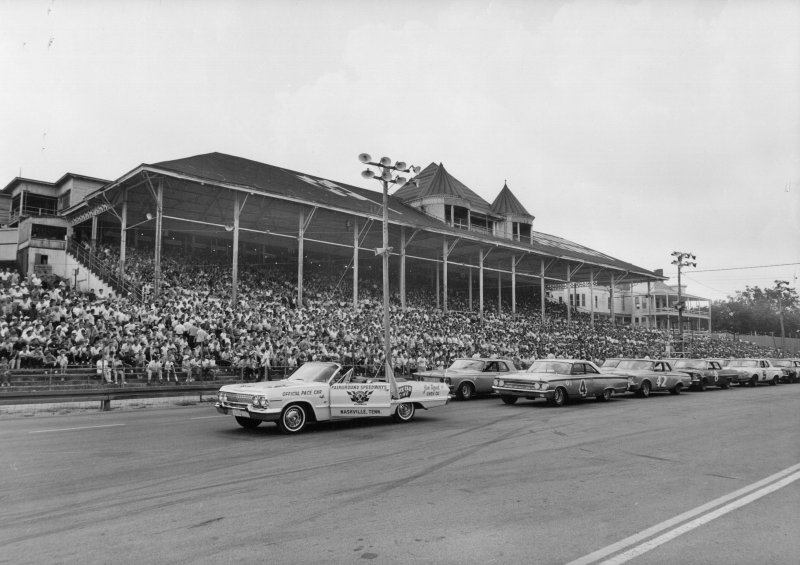

Petty jumped ahead of White at the drop of the green flag and led the first 96 laps. Lund took the lead on a series of pit stops.

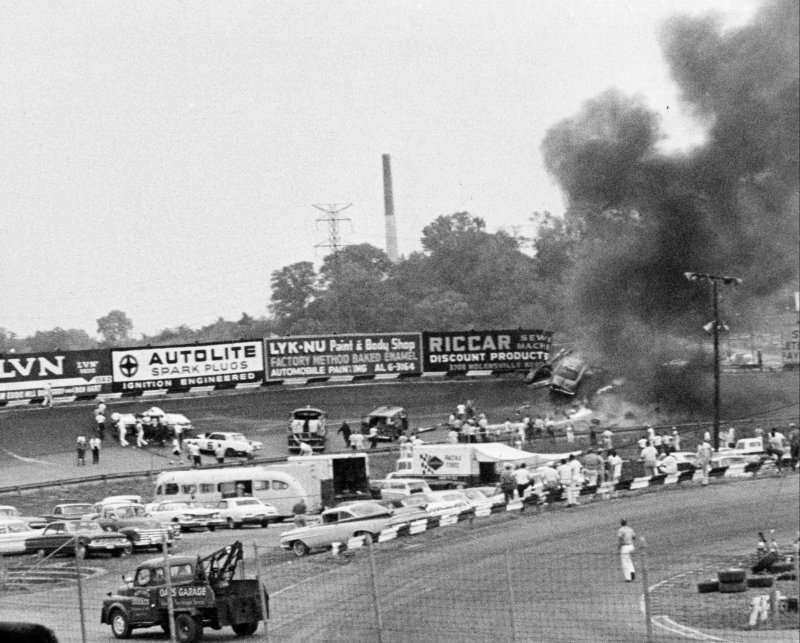
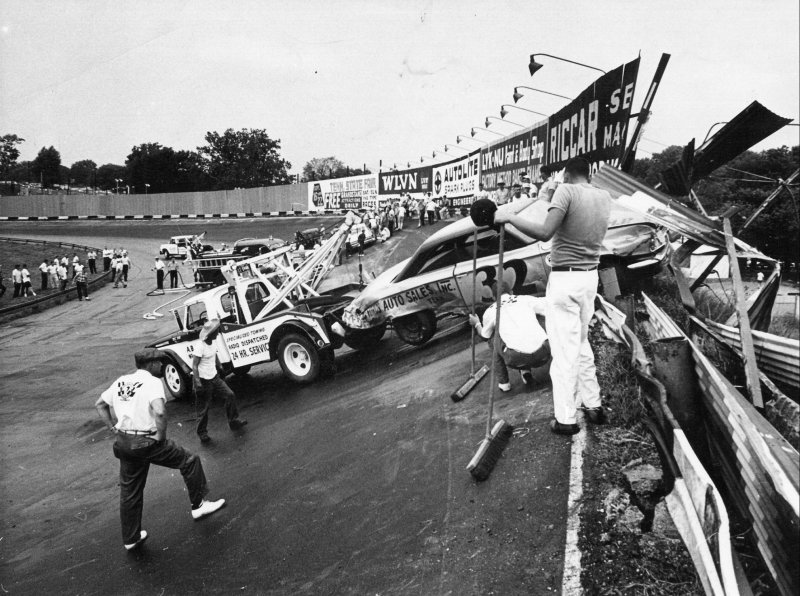
It was at this point that the race became anything but typical. Jim Paschal had taken the lead by using savvy pit strategy. Lund was still running well on lap 194 when his engine blew at the end of the back straight. As Lund’s car slid into the guard rail, he was hit by David Pearson. Pearson’s car pushed Lund’s on top of the railing, destroying two of the billboards that surrounded the track. Rex White was following close behind and ran under the rear of Lund’s car as it was on the guard rail, ripping the right front corner of the roof off just as if you’d used a giant can opener. White received lacerations on his arm that required stiches.

Lund’s car, after being hit in the rear where the gas tank was located, burst into flames with the nose of the car through the guard rail and the back pointing down the banking. Debris, smoke, and leaking fuel littered the track.
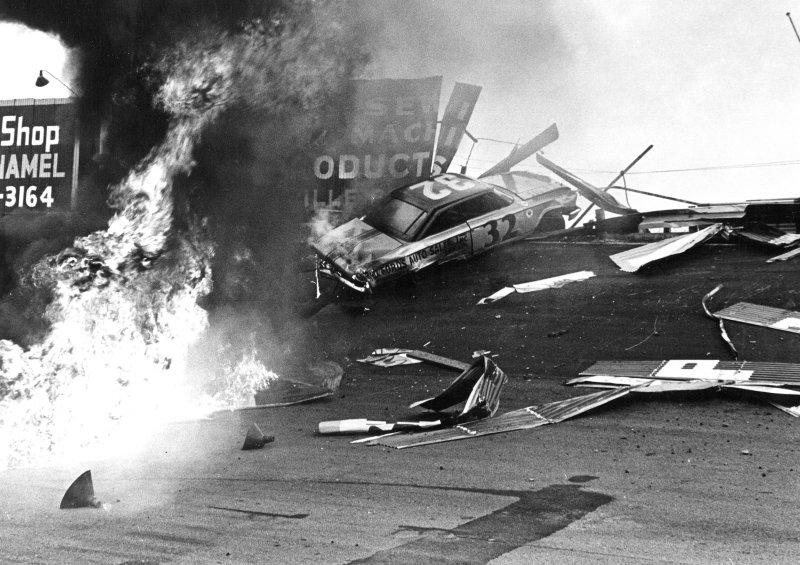
Lund was slow to crawl from the wreckage. Part of the reason was because, in spite of his nickname, Tiny Lund was a big man. He stood over 6 feet tall and weighed in at over 250 pounds. So his race car is on fire, he’s been through a harrowing crash, and he climbs out on top of a banked turn. The cars on the track have slowed for the wreckage and debris scattered across the track. As Lund stumbled down the banking, he staggered right into the side of the car driven by Cale Yarborough, putting a huge dent in the passenger door. Cale’s car owner, Herman “The Turtle” Beam, wasn’t very happy with Cale when he brought the car back with a dented door that didn’t result from an accident with another car.

Lund's car blazes before rescue workers arrive on the scene

The crash as seen from the stands. White's car on the left with the roof peeled back, Pearson's car rests nearby at the bottom of the banking while the Acme fire crew tries to extinguish the blaze

Lund's car is pulled from the crash site

Just 7 laps after the crash, as it has been know to do in Nashville on a hot summer day, an afternoon thunderstorm moved across the Fairgrounds, stopping the race for an hour and 24 minutes.

Between the red flag for the crash and another for rain, darkness was now an issue. Officials decided to stop the race after 350 laps. Jim Paschal scored his third straight Nashville 400 win, followed by Billy Wade, Joe Weatherly, Richard Petty, and Buck Baker.
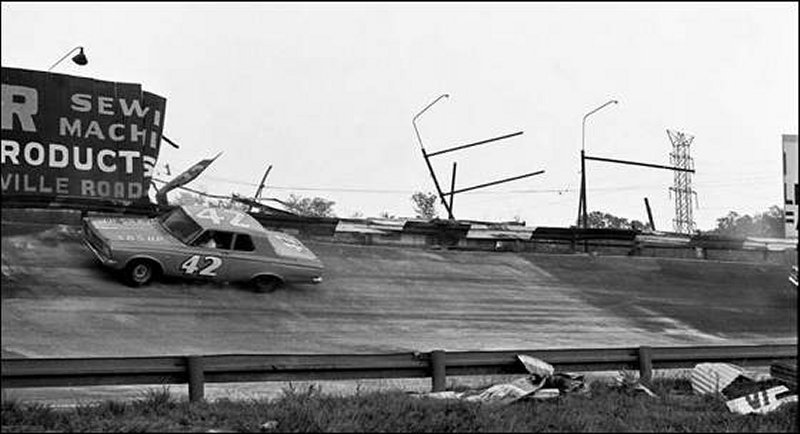
Paschal passes the scene of the accident on his way to his 3rd straight Nashville 400 win

Just past the scheduled halfway mark, local driver Johnny Thoni took over as a relief driver for Jimmy Griggs. He spun the car coming off turn 4 and was narrowly missed by oncoming traffic. He got the car going and brought it home to a 12th place finish, still running when the checkered flag was displayed.

As the Grand National circuit loaded up in the dark to leave Nashville, the 6th Nashville 400 had been anything but a typical race.


Wednesday, February 23, 2011

Don’t Let Off ‘Til You Get to the Gate

A couple of different recent things reminded me of this story. One was a story of how Darlington Raceway attempted to honor the 2011 NASCAR Hall of Fame inductees by putting their photos on the race tickets. That was a nice idea, except they used a photo of Bud Moore the race car driver (known in his driving days as Little Bud) instead of Bud Moore the war hero.

The other thing that reminded me was a photo I saw on the Fairgrounds Facebook page of the actual car taken on the day of the story.

A little background info first. In 1980 Lake Speed made the decision to make the gigantic leap from karts to Cup. He decided to do it on his own. I had already known him about 15 years through karting, so I offered any help I might provide. He had a couple of guys working on the car in the shop, but no pit crew, so three guys from Nashville and I became Lake’s crew.

He hired former driver (with 7 Cup wins) Darel Dieringer to be team manager.

In 1964 Dieringer was driving for Bud Moore, who had won the championship the previous year with Joe Weatherly. Dieringer was to be Weatherly’s teammate for the ’64 season, but Weatherly was tragically killed at Riverside.

Now that you’re up to speed on the background here’s where it all ties together. Dieringer told this story one night at dinner during the 1980 season.

On August 2, 1964 the Grand National cars rolled into town for the Nashville 400. Imagine a typical hot August day in Nashville. The cars were practicing for the 400, but Dieringer wasn’t happy with the way his Mercury was handling. He would complain to Moore, the crew would make adjustments, Dieringer would practice some more, but he still wasn’t happy.

After a couple of adjustments, Moore suggested the problem might not be with the car, but instead with the driver. Moore told Dieringer the car would handle the banked turns just fine if Darel would, “Drive to the gate before he let off the throttle.”

Another explanation is due here. The half-mile track didn’t have a tunnel. To get into the infield, you either had to cross at turn one as you still do now, or if you went to the sign-in booth behind the backstraight you followed a road parallel to the backstraight and entered the track at a crossover gate near the end of the backstraight just before turn three.

So the guy who had won the NASCAR Grand National points championship the previous year as car owner and chief mechanic was strongly suggesting to his driver that in order to turn a quick lap at Nashville he shouldn’t let off the gas until he got to the crossover gate near the end of the backstraight.

Being a fairly smart driver and knowing who signed his paycheck, Dieringer said he would oblige. He crawled back into his #16 Mercury, gave an extra tug on the belts (thinking they were about to be used), and headed out for more practice.

After warming up a couple of laps, Dieringer came off turn two and headed down the backstraight. Sure enough, following his boss’s orders, he stayed in the throttle until he reached the gate. 

As you might guess, he never made it to turn four.

The wrecker towed the Mercury with the badly damaged front end back to the pits. Darel said he was happy to report to Moore that he had followed orders and indeed, “Drove it to the gate, just like you said.”

Remember, it was a hot August day. The crew went to work repairing the car. Dieringer went to his rental car, got in turned on the air conditioner, and relaxed in the comfort of a nice cool car.

He said he’d regularly check on the progress of the repairs. About every ten minutes he’d honk the horn, roll down the window, and ask Bud, “Hey. You got that car ready for me to drive to the gate again?”

And if you’re wondering, Dieringer did finish 6th in the race the next day.

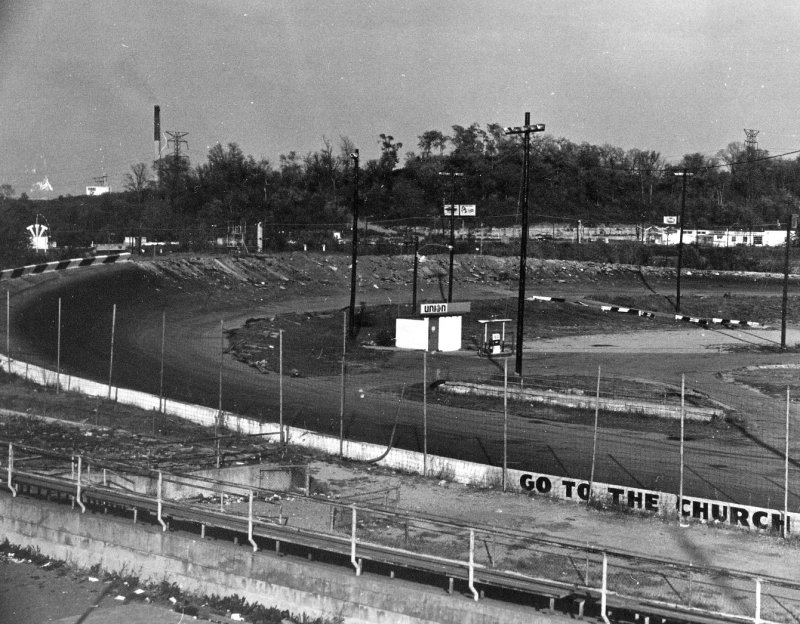
To give a perspective of where the gate was located, here's how the gate looked from the stands. It's the opening between the Pure sign and the Chevyland billboard. 


This Fred Marchman photo shows the entrance road from Craighead across the bridge past the pit sign in booth, along the backstraight to where it entered the track.


Tuesday, February 22, 2011

University of Nascar - Nashville campus

I don't intend for this site to get political. I envision it as a place for younger folks to come and see how things got to where they are and maybe learn a few things. To see the foundation. And for old far, uh, more mature people to maybe relive some fond memories and hopefully go, "Oh yeah, I had forgot all about that, but I was there. I remember that race / day / car / fight."

But I do feel the need to make this point.

The list time I looked at these numbers was 2004. And I took a look today.

In the 2004 Daytona 500, 20 years after the last Cup race at the Fairgrounds, 32 out of the 43 drivers who raced in the 500 had raced at the Fairgrounds. All but 11 drivers, 20 years after it left the Cup schedule.

From the 2011 Daytona 500, I can document 22 drivers of the 43 best stock car drivers in the nation who took the green flag who raced at least one time at the Fairgrounds, including winner Trevor Bayne. Nearing 30 years after its final Cup race, the Fairgrounds is still relevant in the current racing scene.

One final stat. (Hey, it's what I do.) Nine of the 12 Daytona 500 winners since 2000 have raced at the Fairgrounds. Only Ward Burton, Jeff Gordon, and Ryan Newman never turned a lap in competition at the Fairgrounds, as far as I can tell.

What that tells me is, if you want to get your PhD in racing, and you're attending the University of Nascar, you'd still better take some advanced classes at the Nashville Fairgrounds campus.

Nascar wannabes huh?

We now return you to your historical Fairgrounds blog.

Monday, February 21, 2011

Out with the Old, In with the New

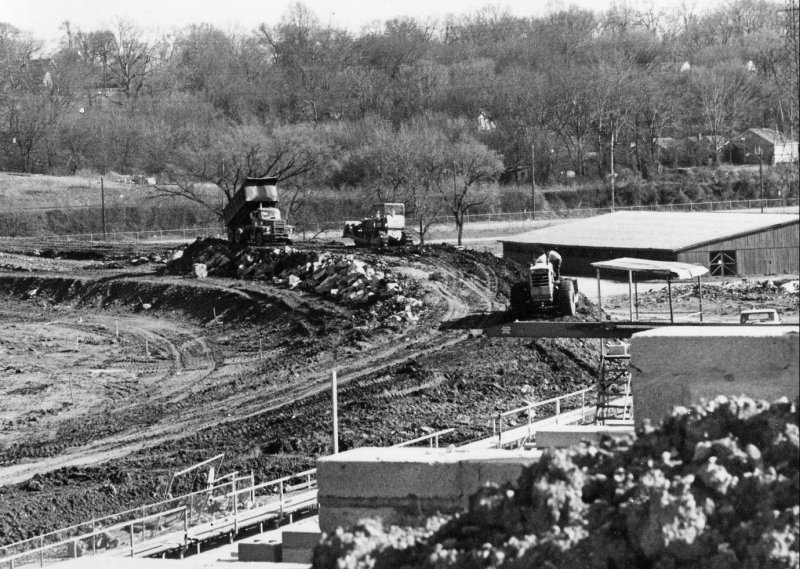
I've had some readers tell me they enjoyed the post on the 1970 season, especially the construction photos. So this installment will just be photos of the old half-mile being demolished and a few construction photos of the current facility. I had more construction photos but lost them in a hard drive crash. The one that taught me the lesson about backing everything up.

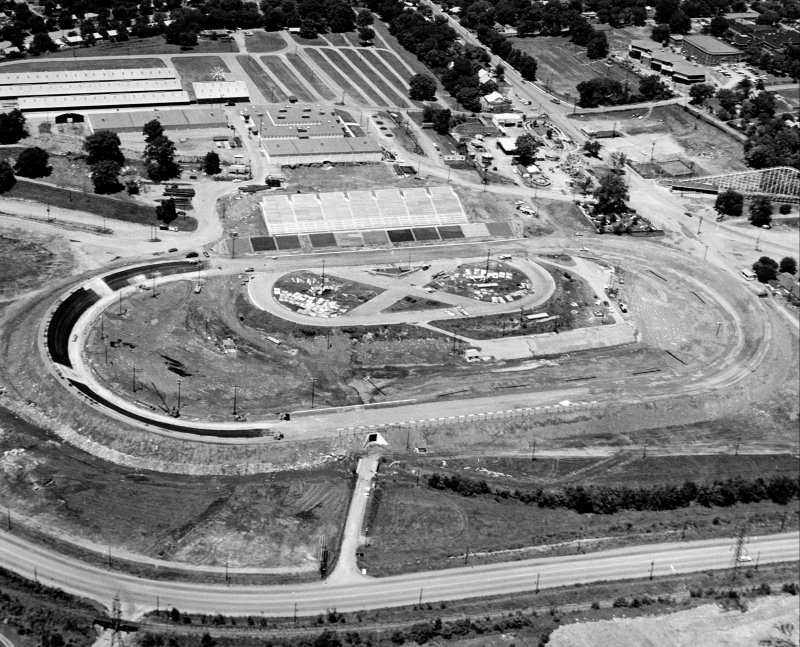
Before we tear down the half-mile and build the high-banked five-eighths-mile track, lets look at some photos that are fascinating to me. Did you ever wonder about in the days before computers and cad programs just how construction projects were envisioned?

These photos show how they figured out what the new banking would look like. They made what appears to be grids made out of string and put them in place out on the track. These string models show on the old track what the banking would look like on the new track. At least best I can figure that's what these are photos of - if anyone can add to or enlighten me, I'm all ears!

All photos are from the Jay Donoho collection, although I have a feeling some, if not all construction photos were taken by Fred Marchman.


So now we have an idea of where the new track will be and what the banking will look like. It's time to demolish the half-mile.


There are a couple of more demolition photos in the story on the 1970 season.

Now that the half-mile is gone, it's time to build the new facility. As with most construction projects, this one got a little behind schedule. The 1970 Flameless 300 season opened was scheduled for May 30. Tickets were printed with that date. But as of May, the track was no where near ready. June 30, still not ready.

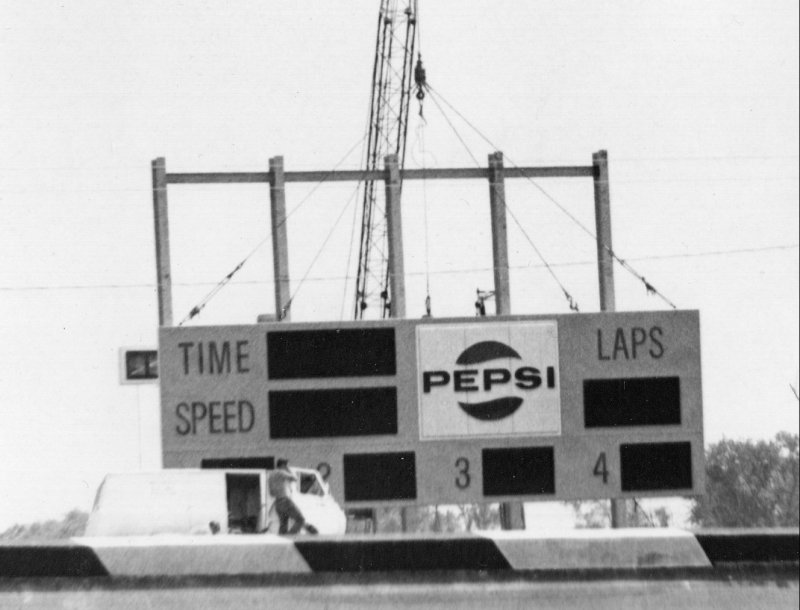
The Nashville 420 Grand National race (now Cup) was originally scheduled for Sunday, July 26, 1970. There is a photo of Bobby Allison sitting on the couch in Mr. Donoho's office in front of a painting of the scoreboard with that date on the scoreboard.

Television would change the plans. In December of 1969, ABC's Wide World of Sports announced they would televise five of the 1970 races live, being joined in progress with the final hour and a half being shown live on Wide World.

Nashville was selected as one of the races to be shown. To accommodate the television schedule, the race had to be moved back to Saturday, the 25th of July. That also meant the track must be completed!

Construction crews were put on overtime and at 2:30 in the afternoon on a blazing hot July 25th, with ABC cameras looking on, the Nashville 420 took the green flag. The race was joined live on the network at 4:00 local time, and finished in time to do an interview with winner Bobby Isaac and got off the air on time at 5:30. It was the first nationally televised live sporting event from Nashville.

Some construction photos:


Adding fill dirt for the high banks

The track under construction and the stands with no roof

The scoreboard being lifted into place

A little about this final photo. This was taken during the 420. Click on the photo to enlarge it and look at the white booth in the center top of the stands. That's the broadcast booth where Jim McKay and Chris Economaki called the race from. You can see the Wide World of Sports banner at the bottom.

Also notice the facility wasn't quite completed yet. Look between the top of the stands and the roof - no windows, no offices for the track or the Fair Board. They wouldn't be completed until later, but they also weren't needed in order for the race to make the scheduled tv date.


Thursday, February 17, 2011

It's Not All Stock Cars, You Know


Although the local weekly races at the Fairgrounds have always been run with “stock cars” and the special events that stand out in people’s memory are of Cup, Nationwide, ASA series and the All-American 400, there have always been other “special events” peppered throughout the years at the Fairgrounds. It should come as no surprise to those who know me that I’d get around to talking about open wheel racing.

When you hear the names A.J. Foyt, Parnelli Jones, Jim Hurtubise, Eddie Sachs, and Don Branson you probably associate them with the Indianapolis 500. They all either won or at least started on the front row at Indy.

But all those stars of Indianapolis and more raced at the Fairgrounds.

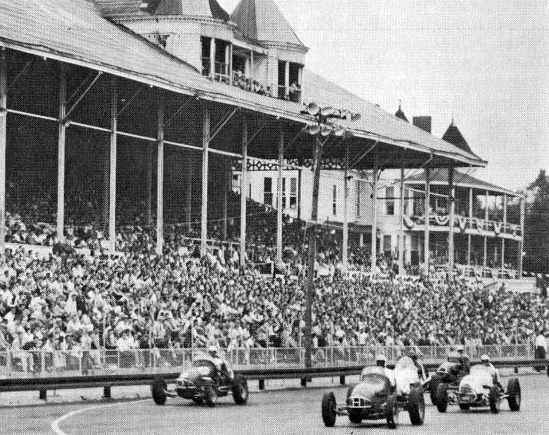
Going back as far as the 1930’s when it was a mile-and-an-eighth dirt track the “big cars”, similar to what competed in the Indianapolis 500 raced at the Fairgrounds during the State Fair. A couple of star drivers of the era competed in the 1937 race at the Fairgrounds. Duke Nalon, who was most famous for driving the famous Novi in the 500, and Ted Horn, who was a three-time National Champion driver both raced here. The event was rain delayed a day and there are some stories still floating around about how the drivers passed the time during the delay with a card game on a boat on the Cumberland River. Nalon came back the next day to win the race.

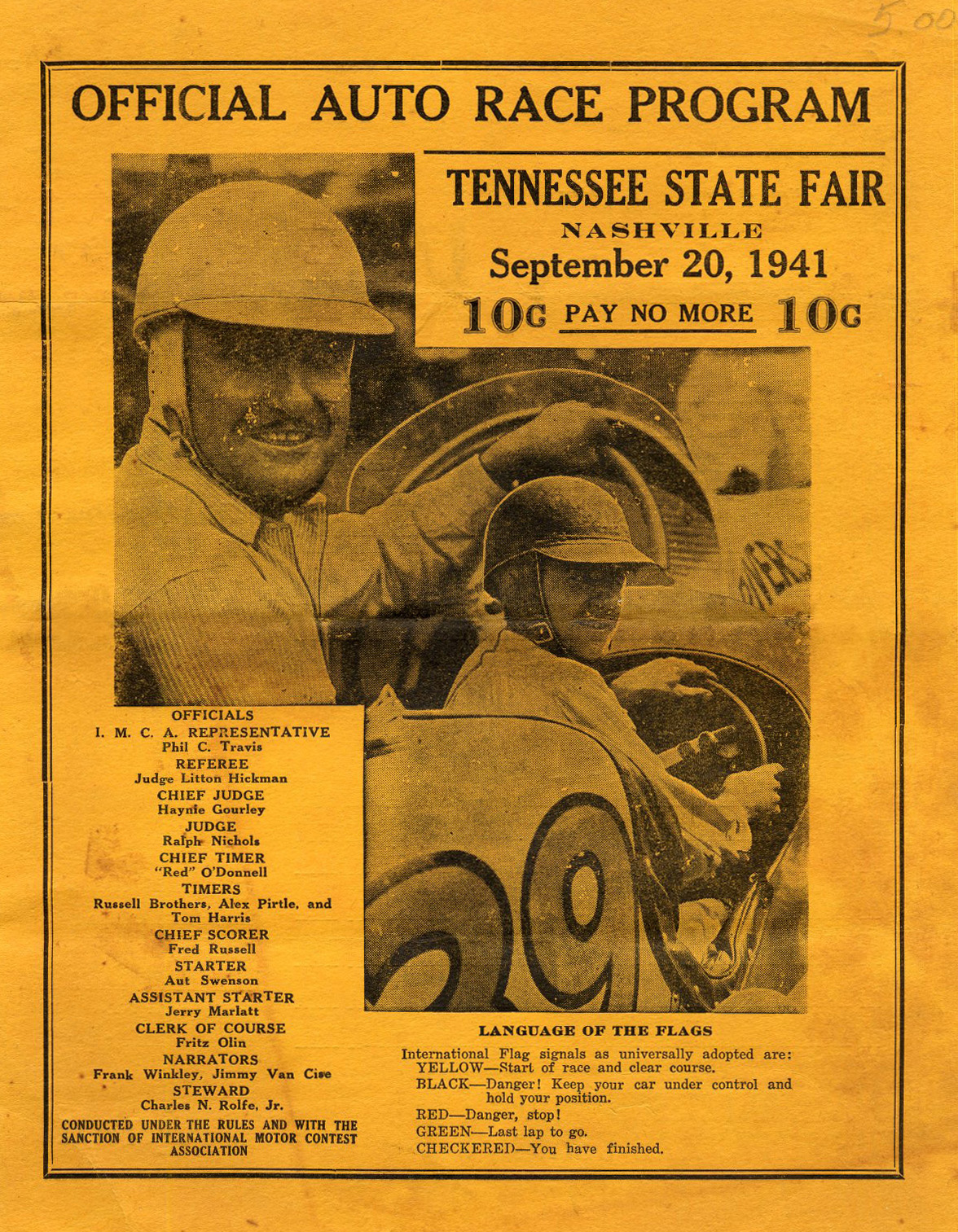
Within the next couple of years the races during the Fair were sanctioned by the International Motor Contest Association, or IMCA. The IMCA series was used as a training ground or springboard to the Indy cars, much like the Xfinity Series today in Nascar.

Click on the program to enlarge it. Notice the names of some of the officials - some very prominent Nashvillians!

All auto racing was suspended during World War II. The nation had been basically shut down because everything was devoted to the war effort. As the war drew to a close, people were starved for entertainment.

When racing resumed in 1946, there was great interest in the race to be held during the Fair. Attendance records were set every day during the Fair. The races were to be held on the second Saturday of the Fair, or the next to last day of the Fair. Among the entries were favorite Emory Collins, Chuck Frame of Kansas, and 18 year old Bill Steeley of Danville, IL. Frame would be driving the “jinx car”, a car that had fatally injured two drivers earlier in the year and Steeley was said to be, “the youngest professional driver in the nation today.”

Another highlight to the day’s program would be an exhibition by Antonio Granatelli in his rocket-powered car. You might know him better as Andy Granatelli, the man who made STP a household name. In 1972 he also orchestrated the sponsorship by STP of Richard Petty.

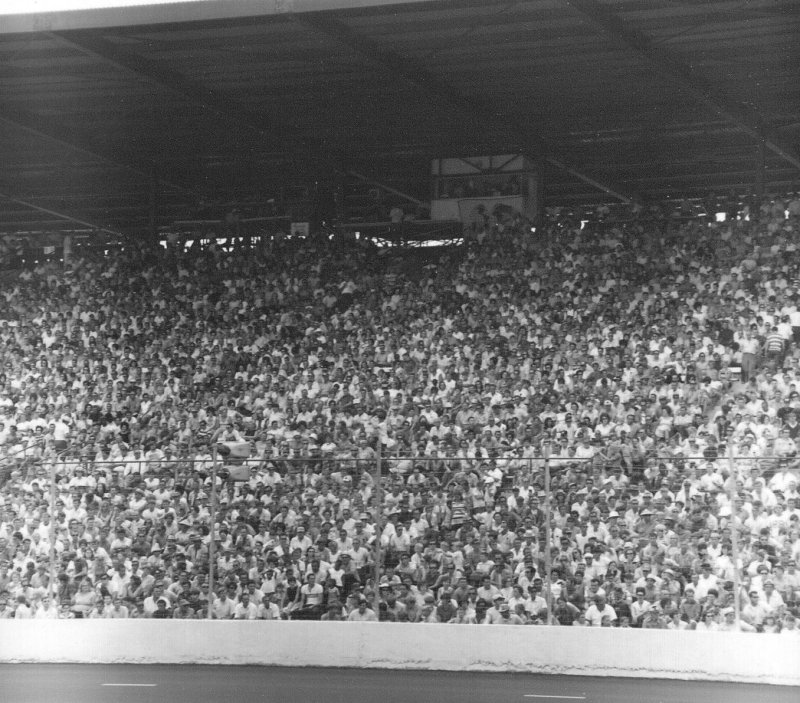
Tennessean front page from 1946 showing the packed stands

Race day saw the largest crowd in Fairgrounds history. Keep in mind this was 1946 – that was 15 years before interstates were built in Nashville. The three downtown bridges (Jefferson, Woodland, and Shelby - the Victory Memorial Bridge hadn't been built yet) were the only way for those on the east side of the river to get to the Fairgrounds. Photos in the paper show traffic backed up two wide from the Fairgrounds down Fourth Avenue to town and across the Shelby Street bridge.  The Tennessean reported the attendance for Saturday’s races as 56,000. Remember that the midway for the Fair was in the infield of the track and many people watched the races from the infield (much like the Kentucky Derby at Churchill Downs). But the grandstands were filled to overflowing.

And the crowd wasn’t disappointed. Granatelli set a world’s record of over 108 miles-per-hour in his demonstration run. And the pre-race favorite Collins won the feature.

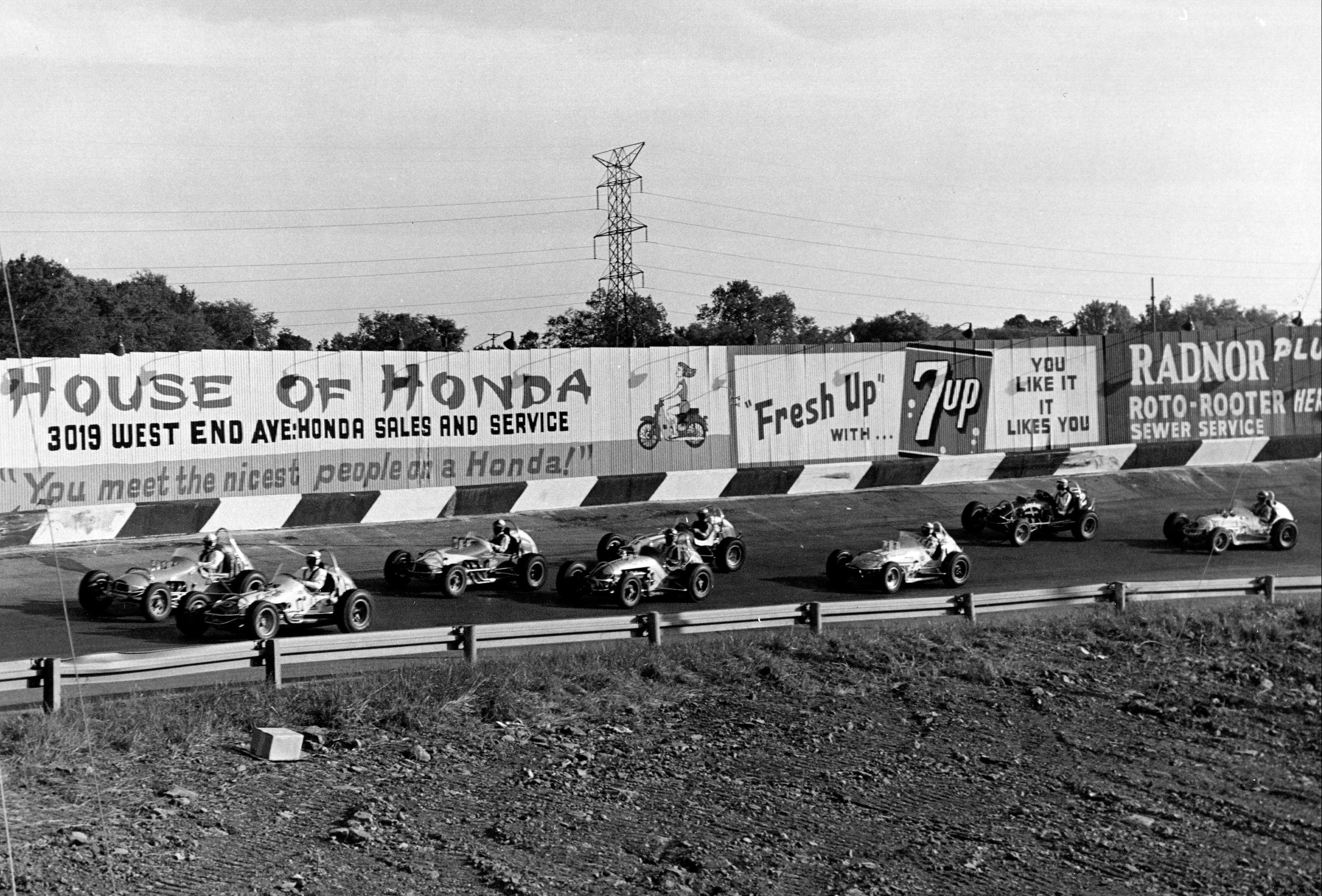
Down the front straight in 1961.

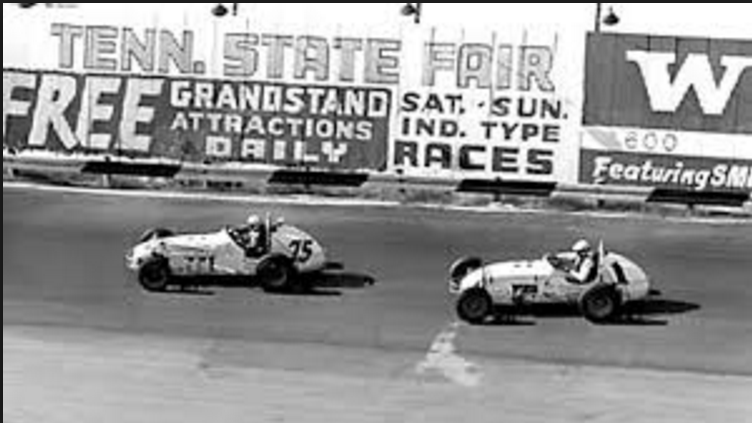
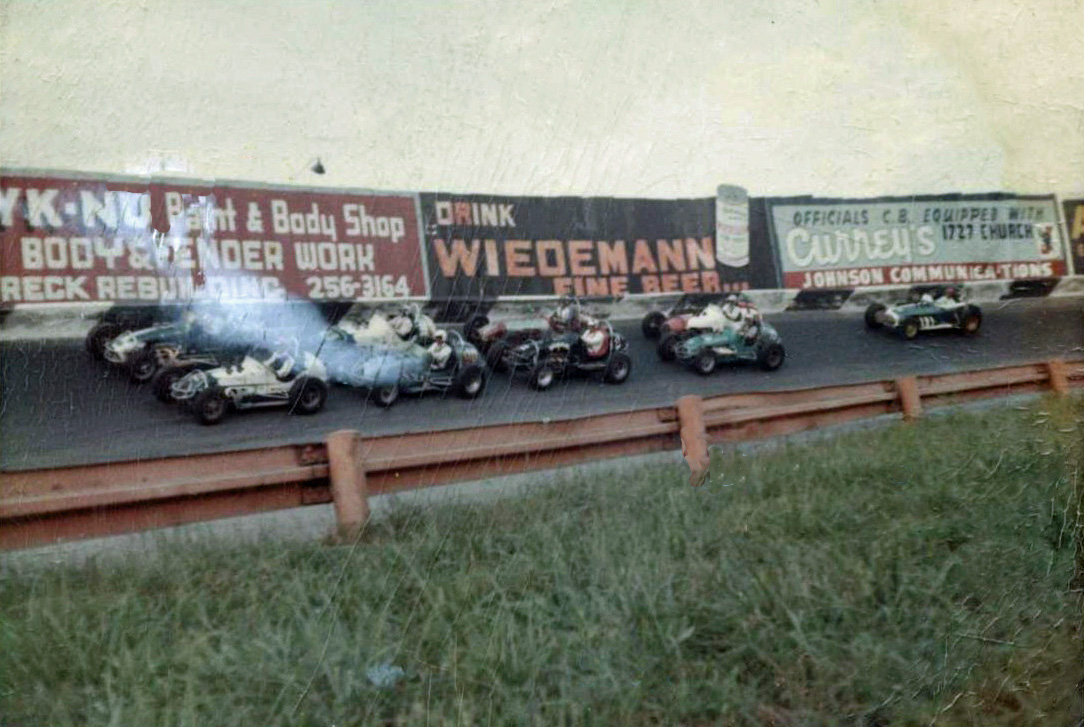
 The IMCA cars continued racing during the Fair through 1967. They even ran in 1965, 4 days after the fire that destroyed the grandstands. The bleachers weren’t heavily damaged by the fire, so they were used for spectators for the 1965 races. IMCA ran a total of 16 races after the paved track was built. A.J. Sheppard won 3 races to lead all drivers. 

Dean Mast from Sugar Creek, OH, leads Johnny White in the 1963 IMCA race.

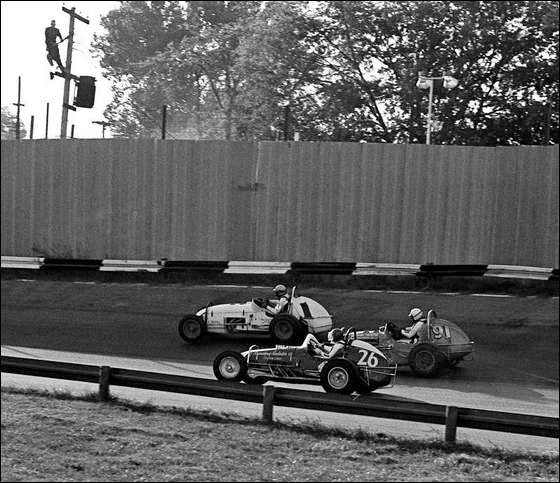
Johnny White (#1) leads off turn 4 in 1963. Notice the guy watching the race from the top of the light pole!

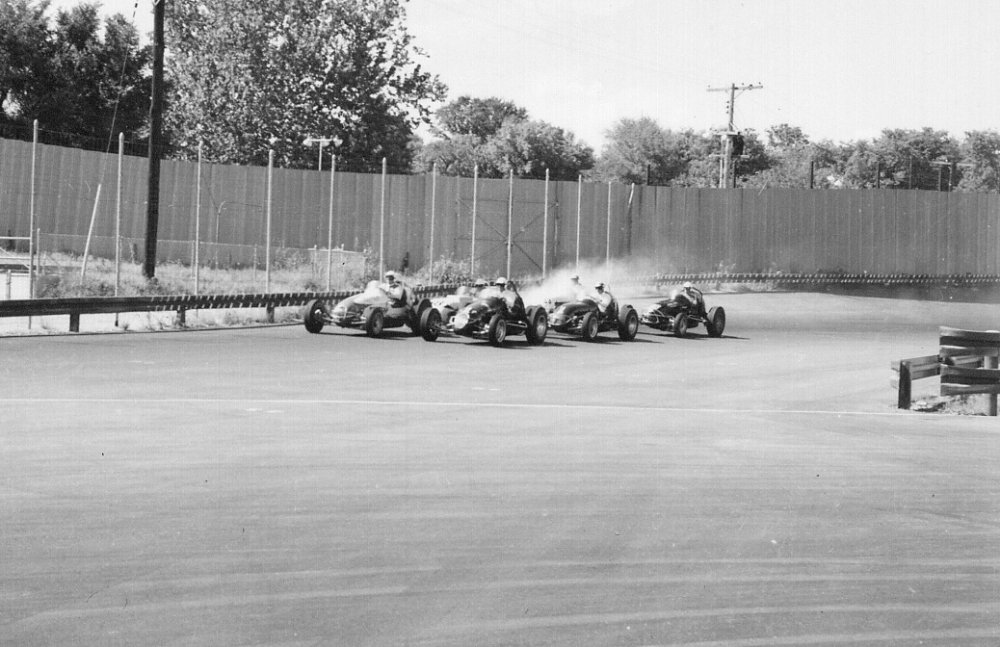
IMCA Sprint cars come smoking off turn 4 for a heat race

IMCA cars lining up for a heat race in 1966

The IMCA Sprint cars line up on the pace lap in 1966

In July of 1959 the USAC Sprint cars ran a 30-lap feature on the half-mile track. Jim McWithey turned a lap at 20.932 seconds to qualify on the pole. Future USAC Sprint car champion Don Branson won the race with McWithey hanging on for second, Leon Clum came home third, followed by Eddie Sachs and A.J. Foyt. Sachs would qualify on the pole for the following two Indianapolis 500s.

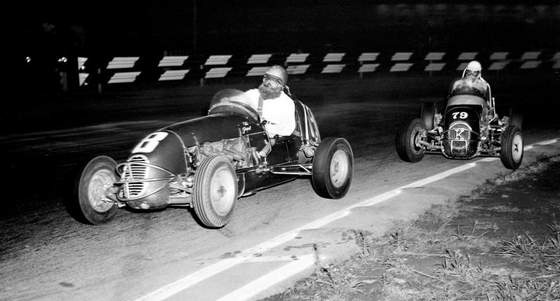
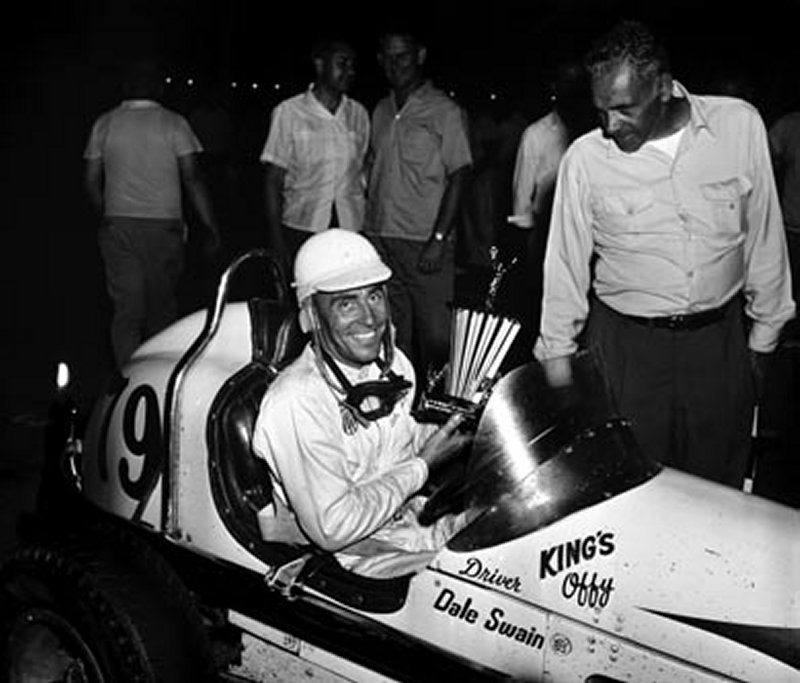
The USAC Midget division competed on the quarter-mile track in 1960 and 1961. Long-time Midget star Jimmy Davies won the race in 1960 and Dale Swain surprised the regulars and won in 1961.

USAC Midgets compete on the quarter-mile in 1961


1961 USAC Midget winner Dale Swain

So as you see, open wheel cars have a deep history at the Fairgrounds. Then there are the cars that raced in the Open Competition events in the mid-60s. But those races are another story for another day.

Monday, February 14, 2011

1973 Southern 400

From what I can remember (which is most of them) along with what I've researched in the library and the stories I've been told of the early races, every Southern 200 / 300 / 400 was a pretty special race. From the first one in 1958 being rain-shortened to Coo Coo and Red battling door-to-door in the 1966 race (a lot of which was captured on film during the making of "Hell on Wheels") to Waltrip, Ingram, and Lindley winning in the 70s to Harry Gant winning in 1978 then turning around and driving the same car 500 more laps the same day (ok, he finished 4 laps down in 3rd in the Marty Robbins 500 - he only drove a total of 696 laps in a single day) to Skip McCord winning the 2007 edition, they all have special stories and memories.
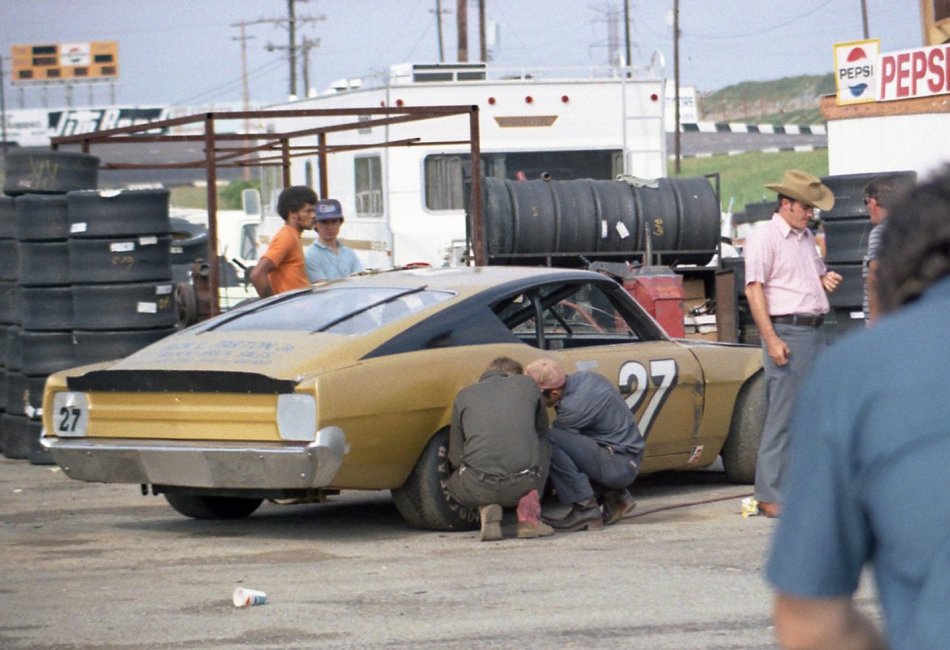
Two of the most heartbreaking losses at the Fairgrounds occurred in the Southern 300. Bob Burcham was leading the 1964 race coming to the white flag when the engine blew. Even at that he completed enough laps to finish 3rd to Bobby Allison and Joe Lee Johnson. In the 1971 Southern, Darrell Waltrip started 3rd, took the lead after 5 laps and was never headed when his transmission gave out with 13 laps to go.

But for now, let's take a look at the 1973 Southern 400. The race had been scheduled for 300 laps since the second year (1959). For 1973 the distance was increased to 400 laps. It was a big race on the Late Model Sportsman circuit. Seventy-one cars showed up, with fifty-nine cars attempting to qualify. That meant 26 cars took a qualifying lap and loaded up before the race even started. Stock Car Racing magazine sent a reporter and photographer to cover the race. The story appeared in the March 1974 issue. The purse for the race was over $24,000. Darrell Waltrip passed up the Grand National race at Martinsville the same weekend to run the 400.
Among the drivers who failed to qualify were 1966 Daytona Firecracker 400 winner Sam McQuagg and 1970 Grand National champion Bobby Isaac.

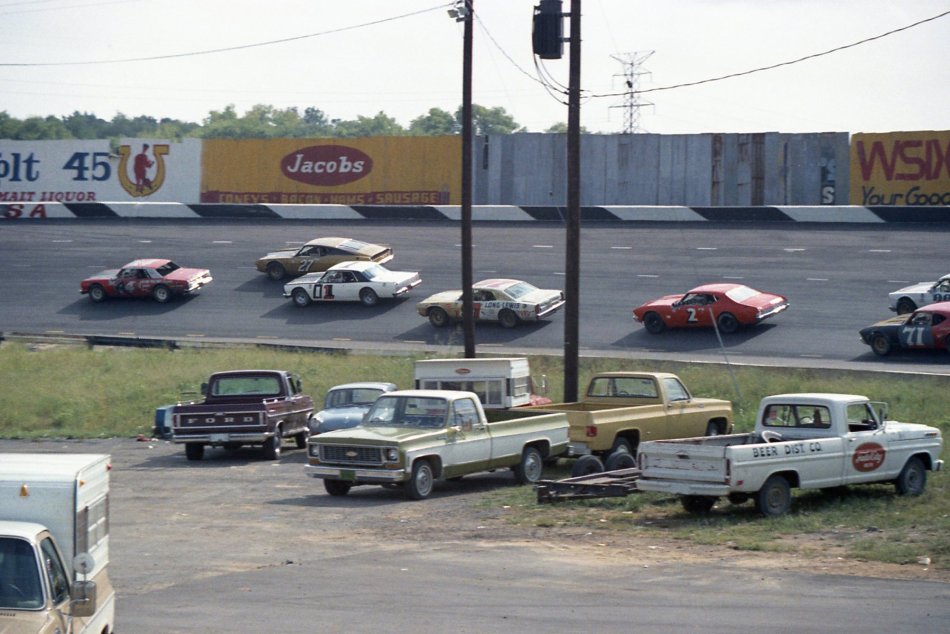
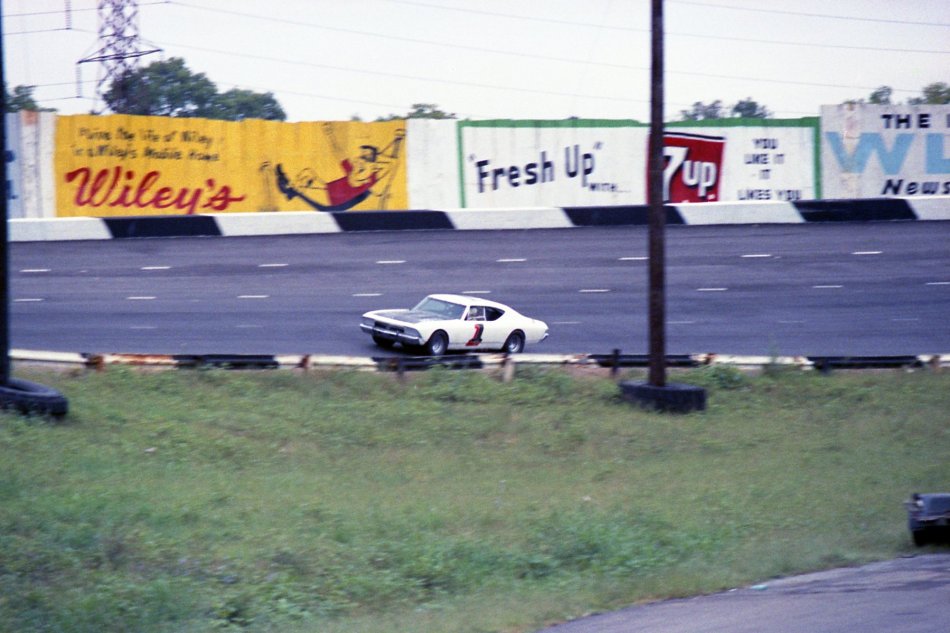
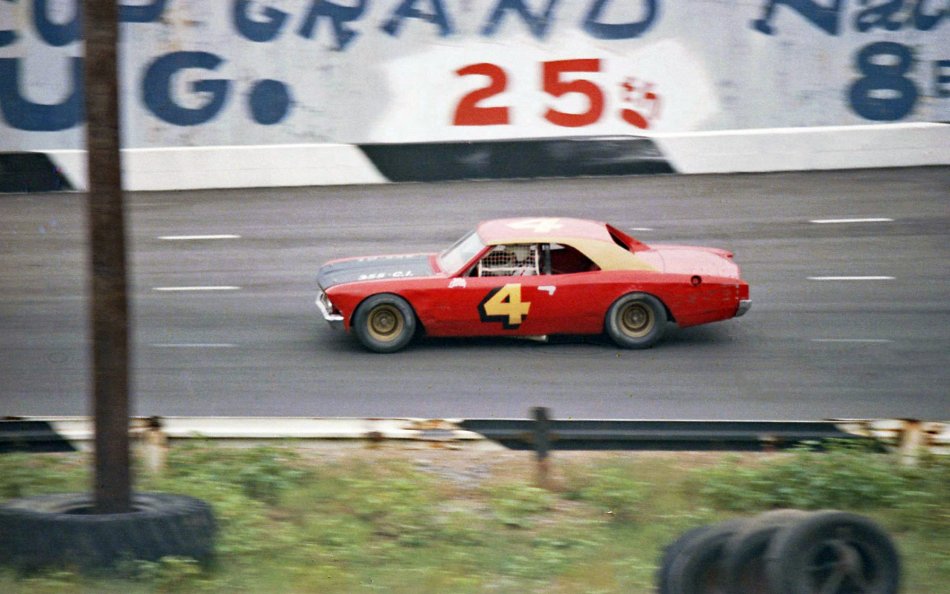
Qualifying times were as close as any big race I can remember at the Fairgrounds. The pole time was 21.00 and the slowest time was 21.64. That close of a spread was unheard of in those days. Part of the reason might be because it was the end of the first season racing on the lowered banks. The asphalt was still fairly new. Look in some of the photos below and you can plainly see the seam where the new asphalt for the lowered banking meets the pavement from the 1970 reconstruction.

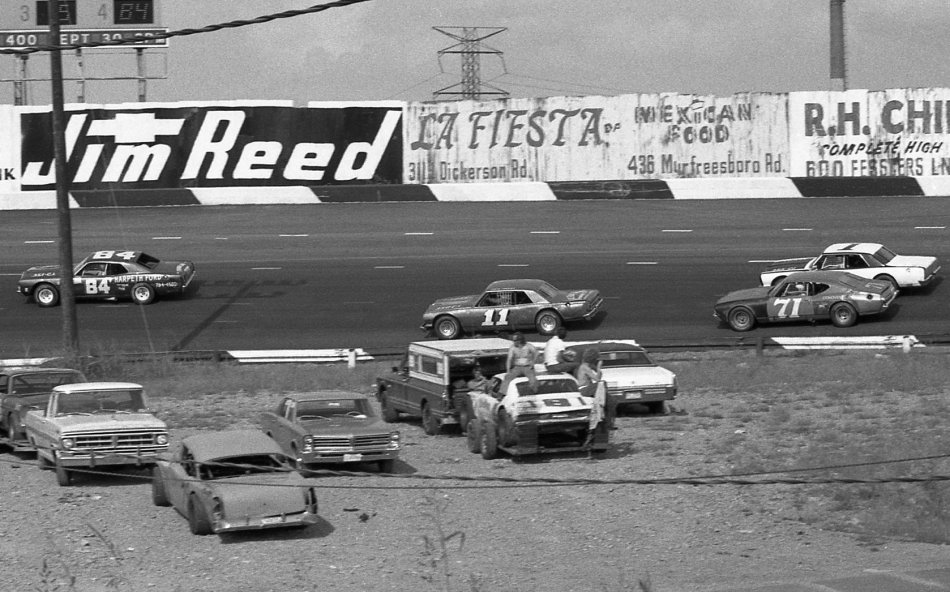
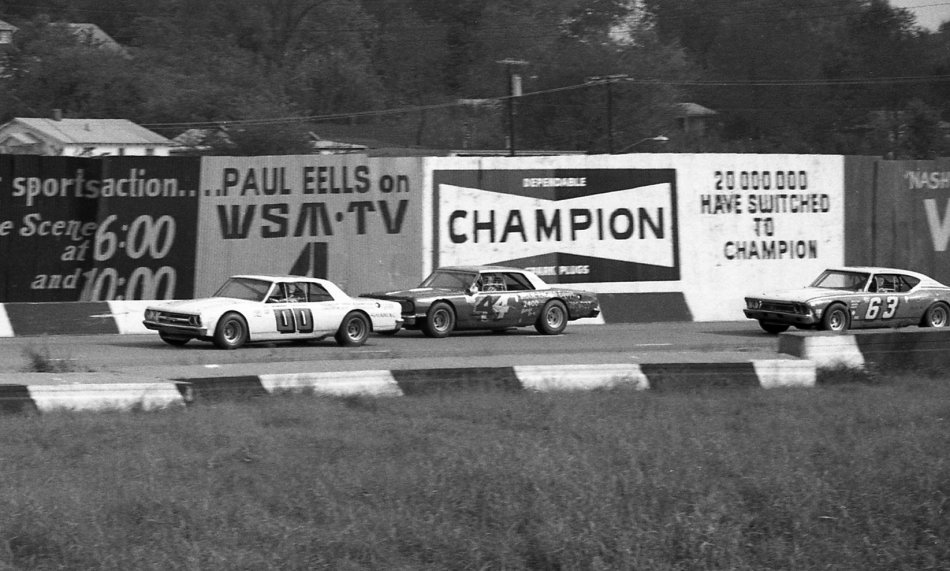
Also notice in some of the photos that some of the billboards are missing. A huge storm blew through just a week before the race and destroyed much of the fencing around the track. The hard-working track crew didn't have time to get it all replaced.

And making more news for qualifying on the pole than those who failed to qualify was Randy Bethea out of Newport, TN. Bethea's pole run was unique for two reasons. One, he was driving one of only 4 Fords in the field. The other reason was because he was reportedly the first African-American driver to qualify on the pole for a major Nascar race.

Here's the starting lineup:

Row 1   Randy Bethea / Darrell Waltrip
Row 2   Jody Ridley / Harry Gant
Row 3   Jerry Lawley / Gary Myers
Row 4   Jack Ingram / Freddy Fryar
Row 5   Jimmy Means / John A. Utsman
Row 6   Alton Jones / Roy Milligan
Row 7   L.D. Ottinger / Neil Bonnett
Row 8   Red Farmer / Morgan Shepherd
Row 9   Brad Teague / Sam Ard
Row 10  Bob Burcham / James Ham
Row 11  Paddlefoot Wales / Steve Spencer
Row 12  Clyde Peoples / Benny Kerley
Row 13  Charlie Binkley / Charlie Chamblee
Row 14  Ray Putnum / Donnie Anthony
Row 15  Peaches Thompson / George Bonee
Row 16  Jimmy Williams / James Climer
Row 17 Jimmy Hensley

Bobby Isaac turned a 21.67 to miss the race by .03 second.

At the drop of the green flag Waltrip, Gant, Lawley, and Ingram broke away from the field. Lawley got caught up in a wreck while lapping traffic and sustained damage to the left rear. Gant lost a lap during a pit stop. Waltrip and Ingram had a terrific battle back and forth for the lead.

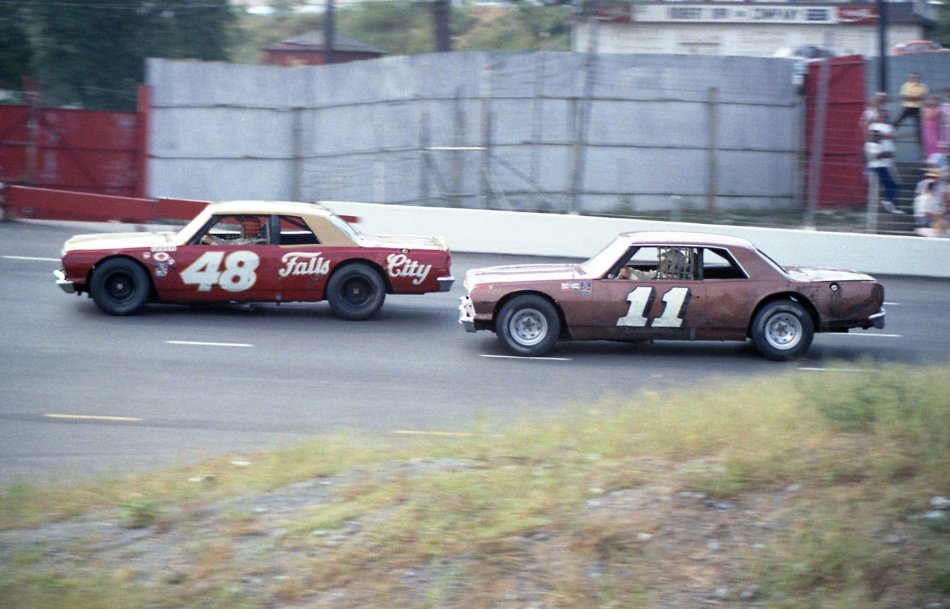
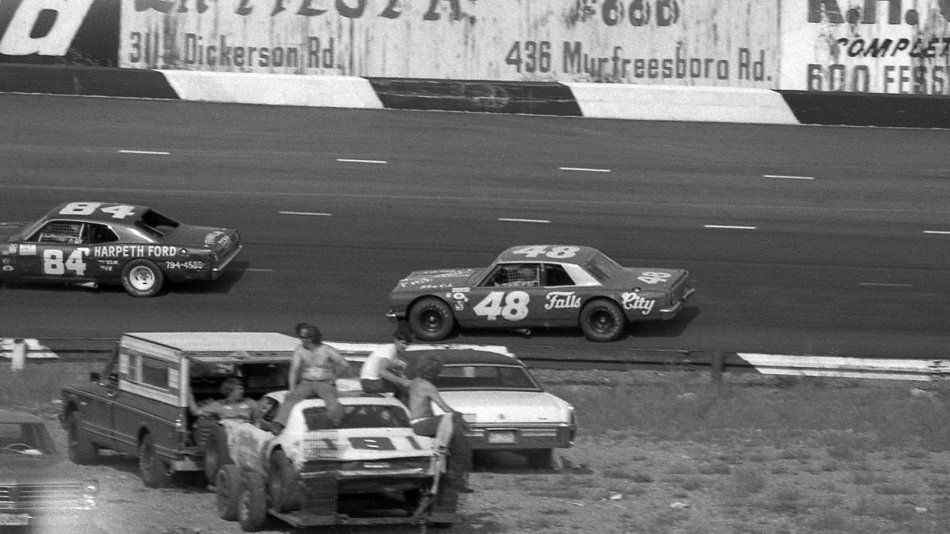
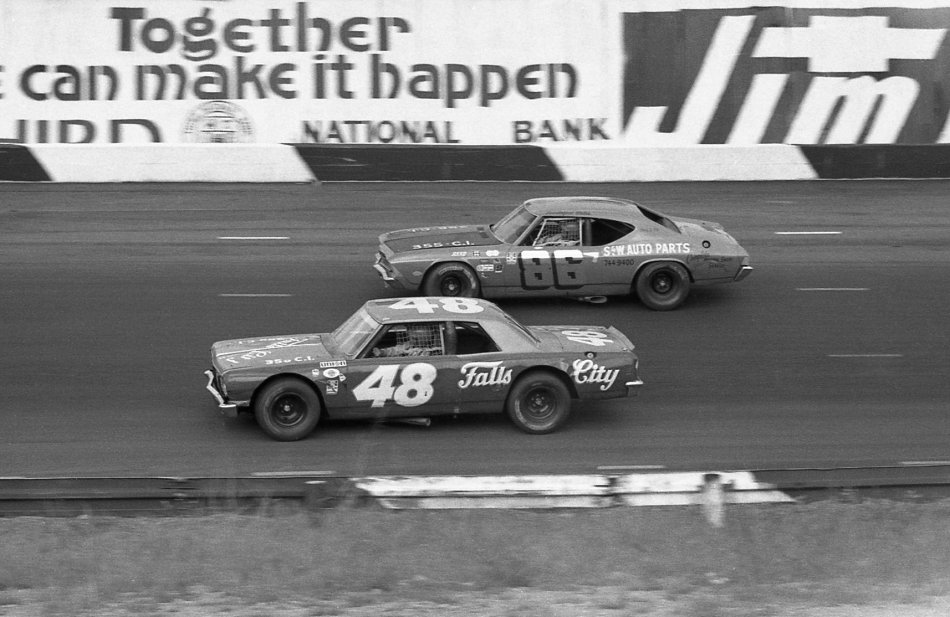
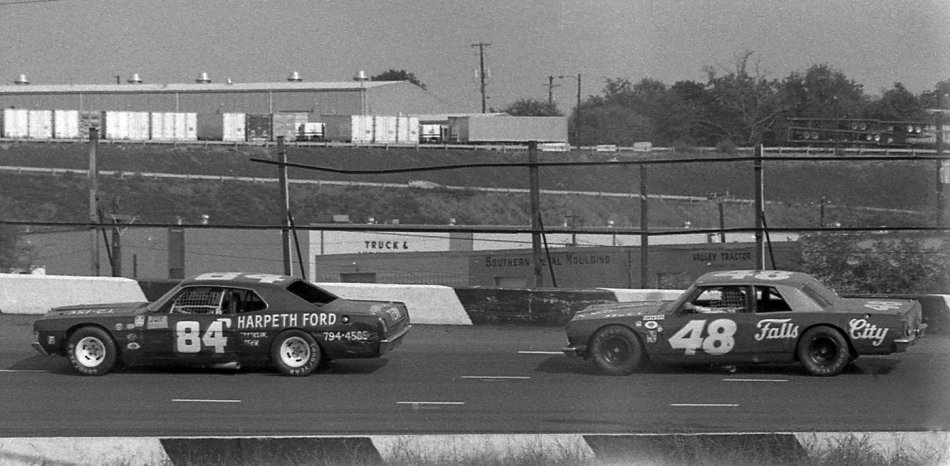
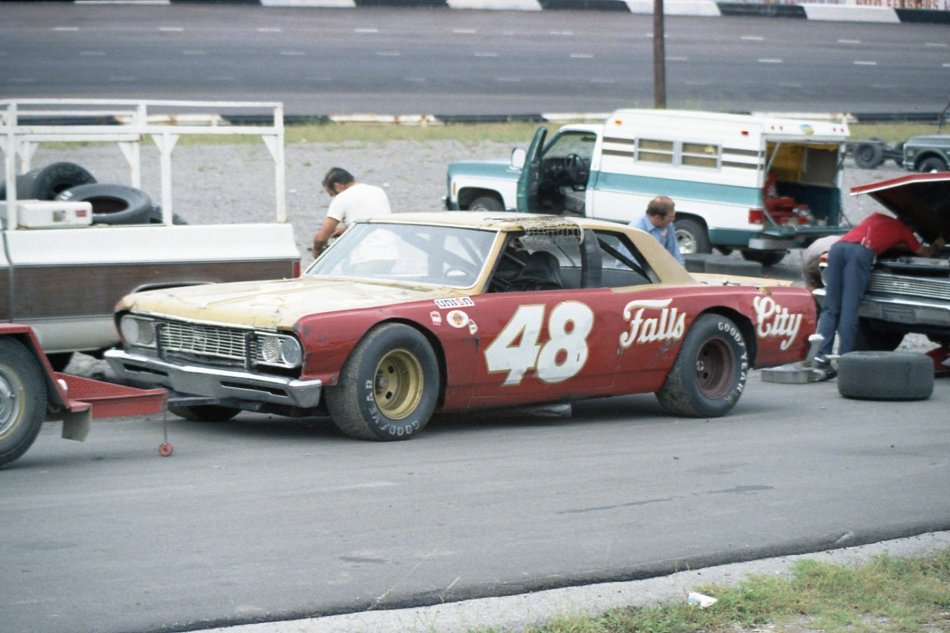
Just past halfway, the engine on Darrell's Falls City Chevy started overheating and Waltrip lost a total of 17 laps while the crew made repairs. Except for being off sequence on pit stops, Ingram would lead the remainder of the race, beating Gant and Ottinger to the line by more than a lap. Brad Teague and Jimmy Hensley followed in 4th and 5th, both 5 laps behind Ingram.

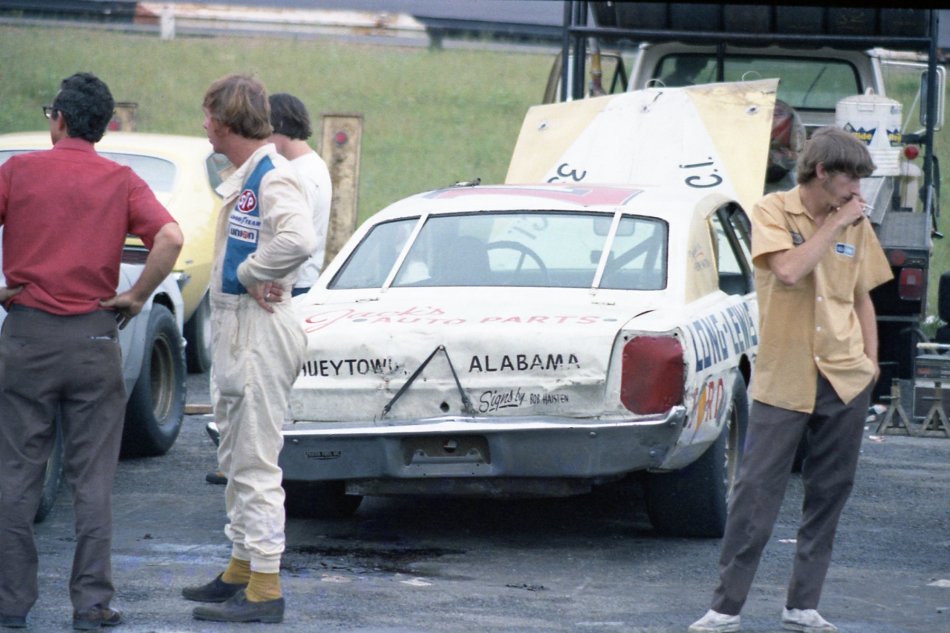
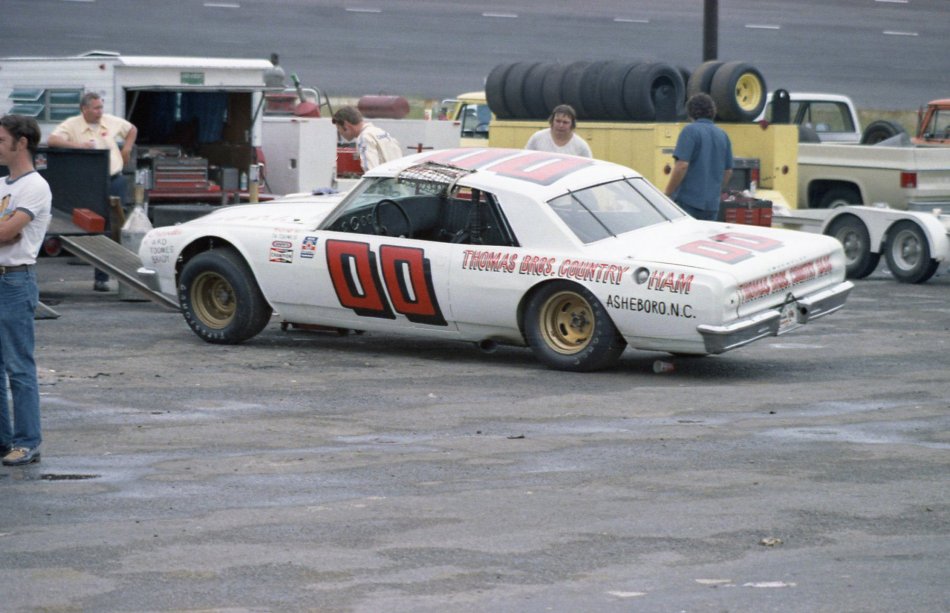
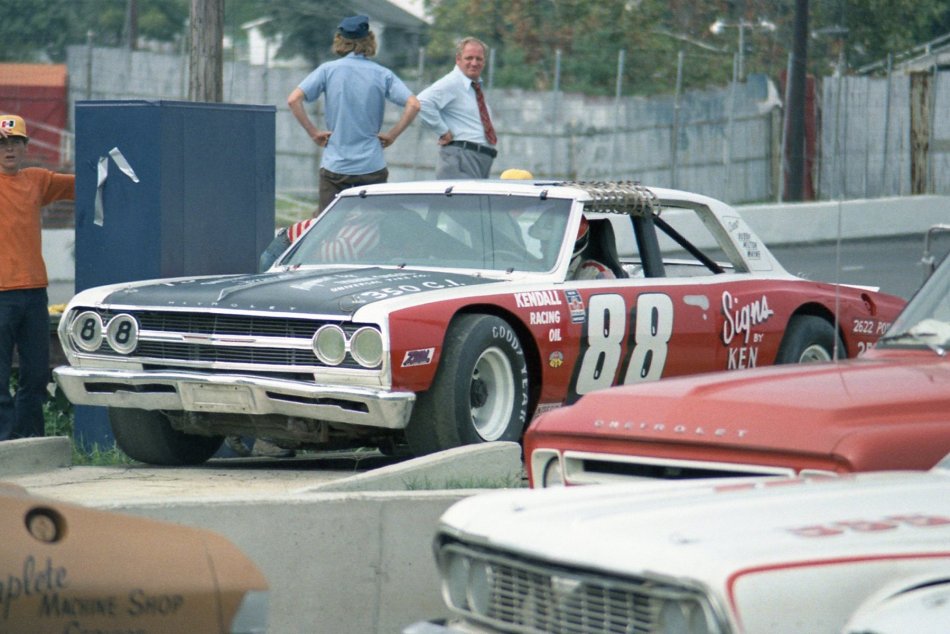
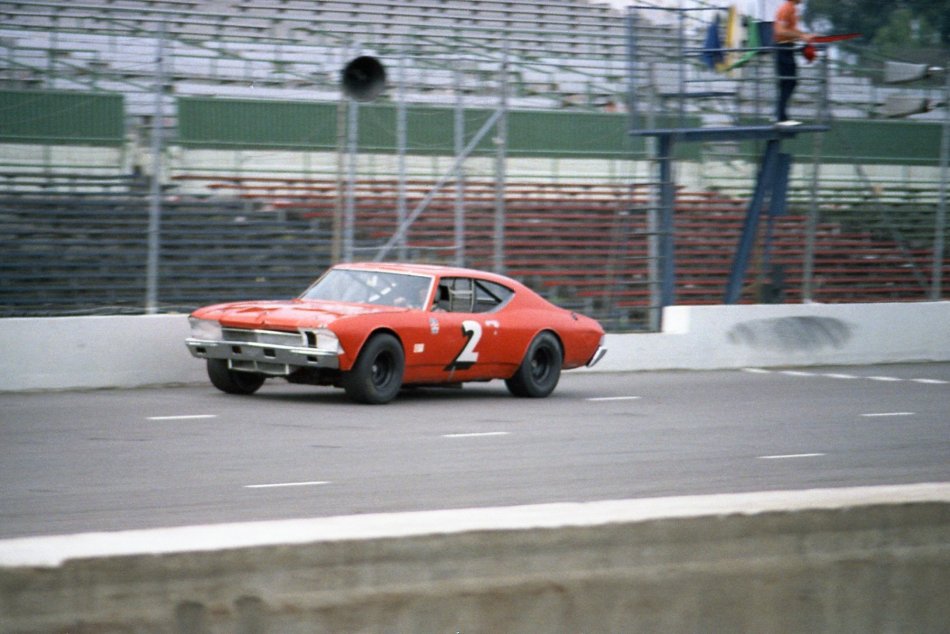
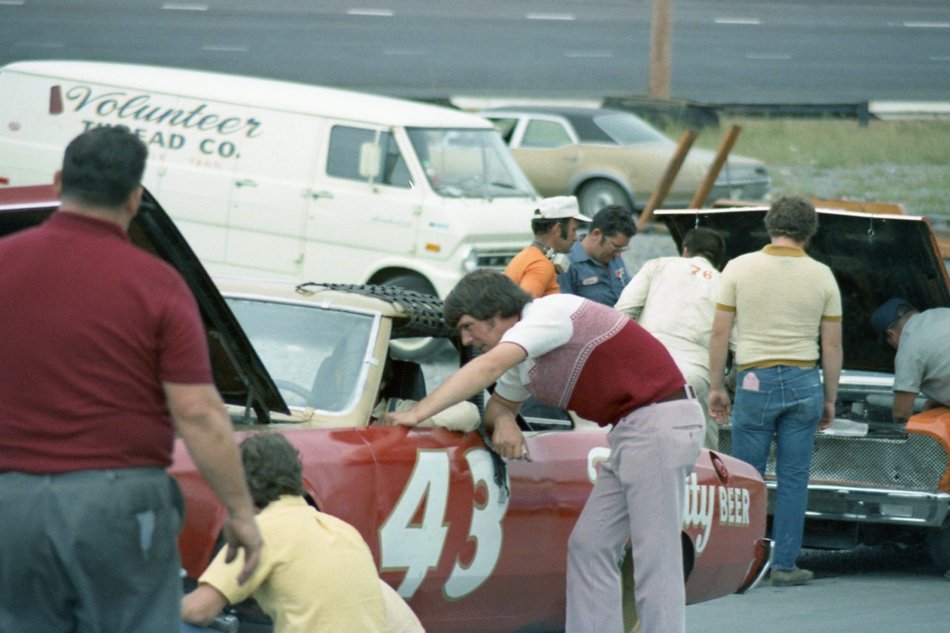
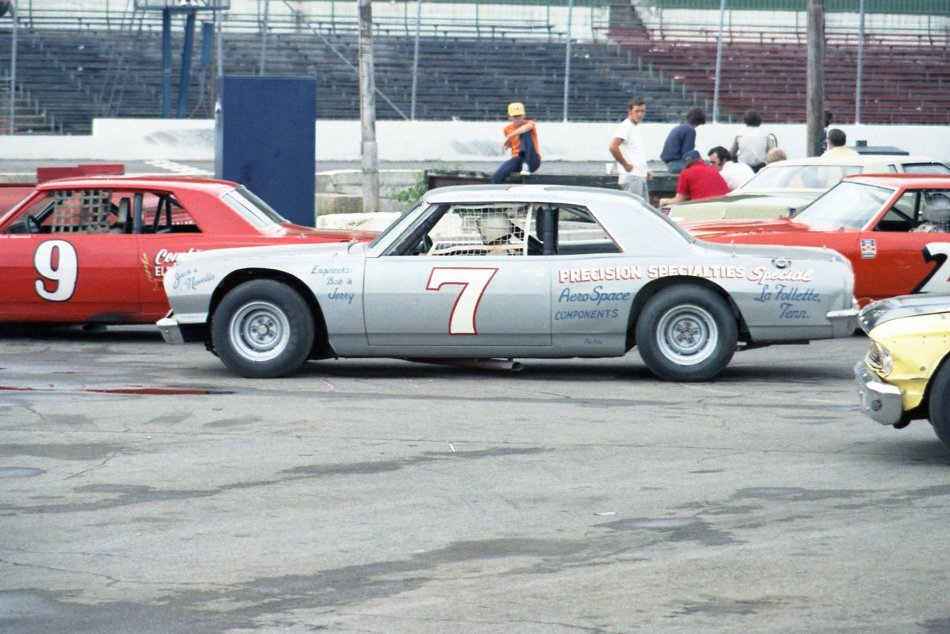
If I might be allowed to be a little self-serving here, I had just turned 16 a month before the race. It was one of the first times I had been allowed in the pits, and I borrowed a pretty nice camera from my high school. Below are some of the photos I took over the course of the weekend.
George Bonee takes the Hart Hastings Chevelle out for some practice laps


The right side of Jack Ingram's car shows the wear and tear of a season


L-R: Bill Morton, Paddlefoot Wales, and Marty Robbins

James Ham (L) and Sam Ard (R) talk things over

Red Farmer and his son (gold shirt on the right). Check the strap holding the trunk shut

The pole-winning Torino of Randy Bethea. That's him just over the rear window.

Sam Ard was in a tight points battle with Jack Ingram for the National Championship

Neil Bonnett takes some practice laps

Jerry Lawley. The car didn't end the weekend looking this good.

Bob Burcham waits in line to practice

James Ham takes the Bubba Francis car across the scales

L.D. Ottinger won the 300 in 1970

Darrell Waltrip won the 1973 track championship in this car

Waltrip (in the double-knit threads) tries to help Bobby Isaac get up to speed

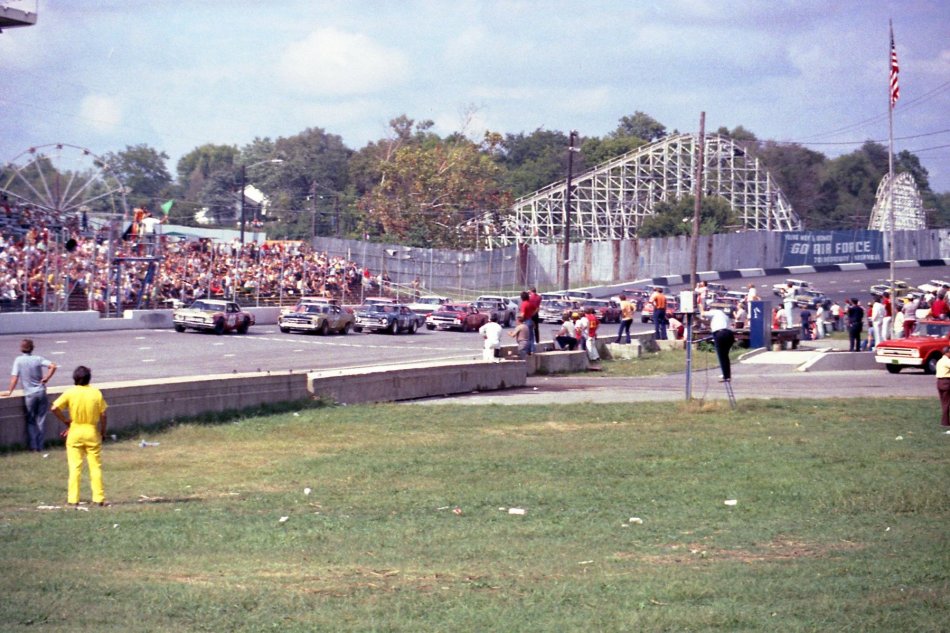
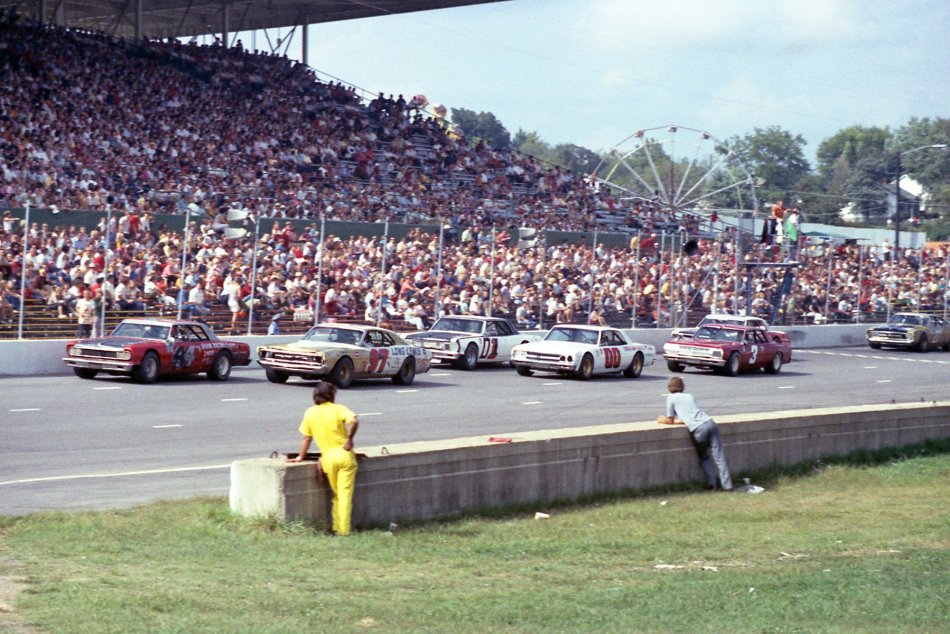
Race Day. The field takes the green flag. Bethea is already fading.

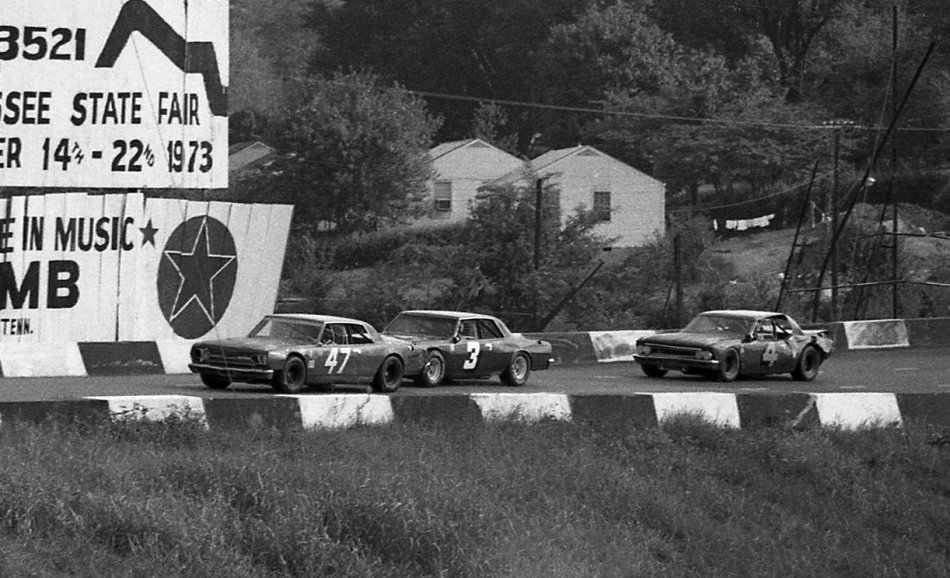
Jones, Bethea, Milligan, Farmer, Ottinger, and Shepherd

Jones, Farmer, Milligan, Ard, and Brad Teague

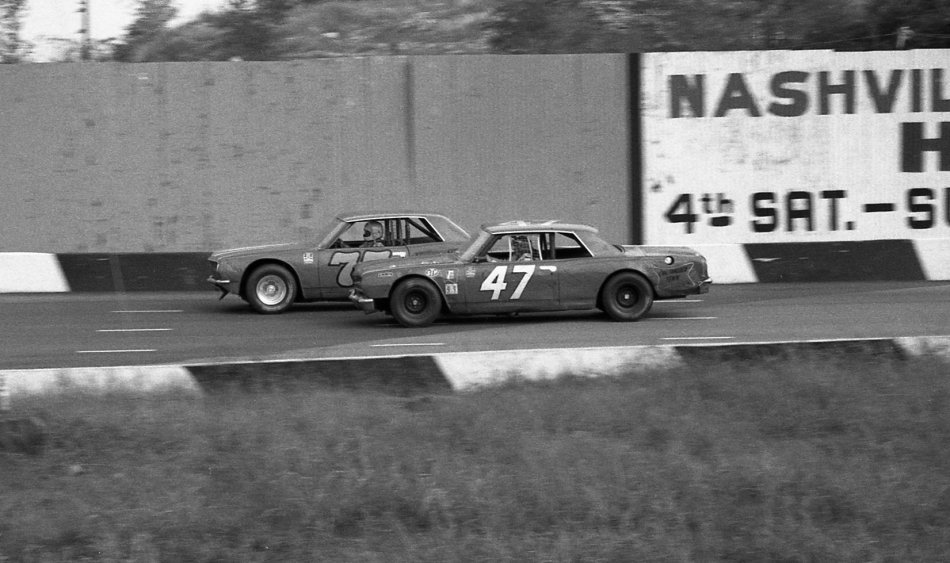
This battle went on quite a while

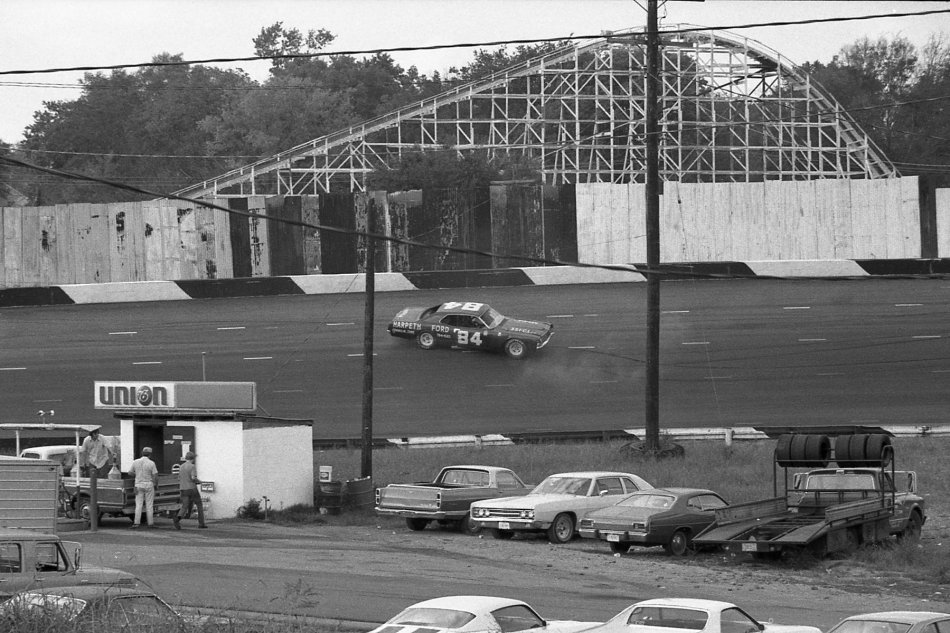
Waltrip trails Jody Ridley who was driving the Harpeth Ford

Ridley leads Ingram, Shepherd, and Milligan

Ard, Jones, and Hensley

Waltrip slips under Wales

Waltrip chasing Ridley

Freddy Fryar under Harry Gant heading into turn 3

Fryar leads Teague and Lawley

The beginning of the end - Waltrip pits with overheating woes

Ridley spins in turn 4

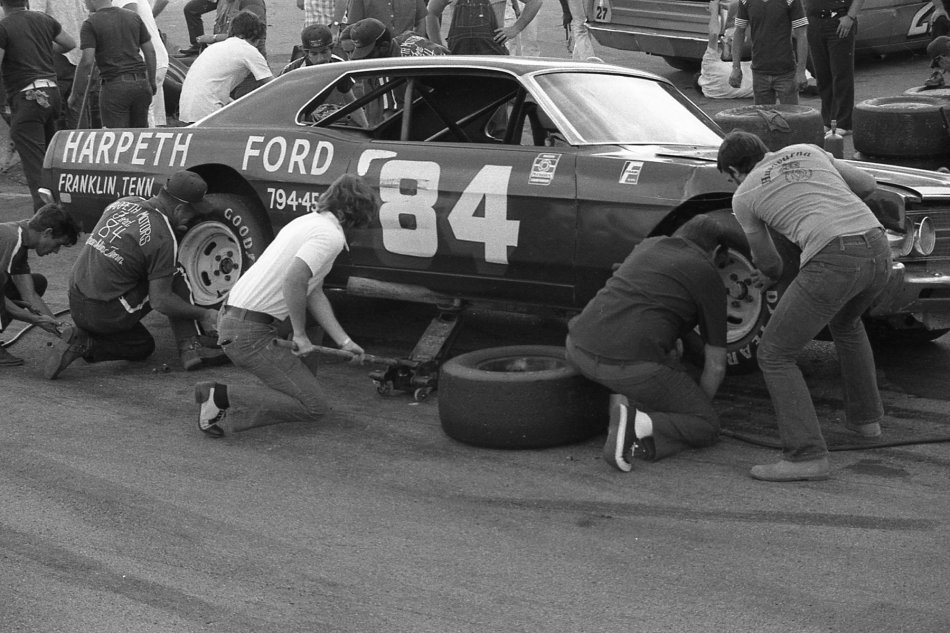
The Harpeth Ford crew give Jody new tires and some Union 76 gasoline

Harry Gant tries to get back on track without losing a lap